Showing posts with label magic. Show all posts

The Spellmakers

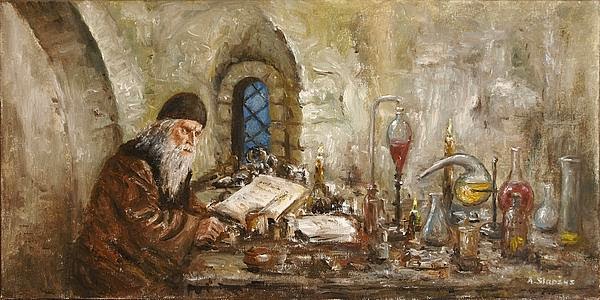
Sorcerers consider themselves to be more disciplined and academic than wizards. Rather than forcing magic into form they work with what is arround them. Far safer, more predictable. If magic were wood, they say, the sorcerer would scour the shore for driftwood, only working with what he found, while the wizard would take his axe to the trees and still be surprised when they fell on him.


  • Spellmaking is equal to Skill+Magic:Sorcery
  • Every morning draw scrabble tiles equal to Spellmaking
  • To cast a spell, form the spell name
  • Discard a tile to cause it to become "wild", standing in for any letter.
  • May test Luck to re-draw tiles. E.g. Discard 4, draw 4.


If you don't own a scrabble set use this table. Roll once per point of Spellmaking (Skill+Sorcery). Produces similar effects, less fun.

1-12 - E
13-21 - A
22-30 - I
31-38 - O
39-44 - N
45-50 - R
51-56 - T
57-60 - L
61-64 - S
65-68 - U
69-72 - D
73-75 - G
76-77 - B
78-79 - C
80-81 - M
82-83 - P
84-85 - F
86-87 - H
88-89 - V
90-91 - W
92-93 - Y
94 - K
95 - J
96 - X
97 - Q
98 - Z
99-100 - Wild

Or use this


Sorcerous makings

Sorcerers are subtle makers of magic, using only nimble movements and poses to perform their work. Unless obviously elsewise, their magic is quiet, only requiring free movement of the body. Armour imposes a 1 letter penalty per degree of protection.


BIG
The sorcerer inflates their body to three times their usual size.

DIM
A target of this spell must test their Luck or be dumbfounded. Beware, for a confused creature can be still more dangerous.

DOC
The sorcerer corrects the energies of another, causing them to regain D6 Stamina.

DOP
Unlocks the locked, unbolts the bolted. Any mundane hindrance will be undone.

DOZ
Cause a creature to test its Luck or act as though it were trapped in a dream. Their movements will be one sixth as fast and they will appear as though floating through time.

DUD
The caster can throw a glamour upon an object, causing it to appear as a bountiful piles of riches. The reactions of those seeing it are their own.

DUM
Cause a creature to drop what it is holding.

FAL
The sorcerer may alter his relationship with gravity, causing himself to float gently to the ground for a number of minutes equal to Spellmaking.

FAR
A making of distant sight. The sorcerer may have visions of the near-future, though they are vague and out of his control.

FIX
This making will fix a person or object in time and space, causing it to remain so until the sorcerer leaves the vicinity.

FOF
Creates an invisible barrier in front of the sorcerer, guided by his spread palm. No magic may pass without permission for turns equal to his Spellmaking, but must be maintained.

FOG
The sorcerer issues a billowing fog from his fingers. It will fill enclosed places quickly, causing all those within to be blinded, but outside is will dissipate readily. 

GAK
The sorcerer may cause themselves to appear terrifying. All those watching must test their Luck or become hopelessly intimidated.

GOD
Cause those interacting with the caster to take an instant liking to them. They will not act outside of their manner, but they will treat them like an old friend.

HOT 
Create a flaming ball from thin air. Engulfs one target for 2d6 damage and they must test their Luck of be set ablaze.

HOW
The sorcerer can predict the next step towards the safest route to escape. It can indicate the correct doorway or turning, the left or the right, and so on.

HUF
The sorcerer may huff and may puff and may blow forth a mighty gale. Man-sized targets may tumble and fall, objects can be knocked off shelves and feeble constructions may be toppled.

JIG
Open a subject's mind to the pipping beyond the edge of creation. They will dance madly until they successfully test their Luck.


KID
This versatile making can cause a number of creatures equal to Spellmaking to believe an illusion fabricated by the sorcerer. It can be anything he wishes, but if he or anyone else acts in such a way as to compromise the verisimilitude of the vision, its effect is immediately lost.

KIN
This spell causes a creature from the mirror spheres to pass through and make battle with it's counterpart. Win or lose, it will disappear on the conclusion of their battle.

LAW
When this spell is laid upon an unintelligent creature it's will is enchained by the sorcerer. It may test Luck, otherwise it is obedient for a number of hours equal to Spellmaking.

MAG
The sorcerer may form this spell very quickly in response to magical assault. They may re-roll any rolls to resist the effects, if they were not permitted one they may now test their Luck.

MUD
Cause the floor at an assailant's feet to become soft and permeable. Their feet sink in and there they stay. Depending on the material the floor is made of, this may be a serious predicament. Lasts for a number of minutes equal to Spellmaking.

NAP
A number of creatures equal to Spellmaking must test their Luck or become drowsy and fall asleep. If they are threatened or otherwise disturbed they will awaken, but otherwise will sleep soundly.

NIF
A smell so virulently offensive that all those within a few metres of the sorcerer will be nauseated unless they test their Luck. The sorcerer may be offended but is unhindered by his own stench.

NIP
The sorcerer, while under this making, may think and act three times as fast. It lasts for a number of turns equal to Spellmaking.

NIX
Making this spell causes the sorcerer to shrink to such a miniscule size that their seem to disappear. This lasts for a number of minutes equal to Spellmaking.

PEP
For a number of minutes equal to Spellmaking the sorcerer become six times stronger, able to perform miraculous feats of strength.

POX
This subtle working causes the target to be open to disease. Those subject to this will shortly become feverish, sniffly and sick.

QIS
This spell enables the sorcerer to see life energy as though a dimly glowing light. Lasts for a number of minutes equal to Spellmaking.

RAP
The sorcerer may use this fabrication to understand and talk to intelligent creatures without previously grasping their language. The effect lasts for one encounter.

RAZ
When cast upon a bladed object it becomes twice as sharp, twice as damaging. Lasts for one significant use (a single battle, hacking apart a door etc.)

RES
A corpse may be brought back to life for a number of minutes equal to Spellmaking. It will be dull and dozy, but may answer questions and wander about. Be wary of the hostile dead.

ROK
The target of this casting begins to calcify. Each turn they must test their Luck, each turn they grow slower and slower as more of them turns to stone. If three tests are failed they turn into an inert statue.

SAP
Cause an individual to lose the will to carry on. In a battle this will result in them having a -1 to all rolls due to their new fatalism.

SIX
The sorcerer divides into six mirrored selves. Assailants will not know which is the real one, since they all look identical. In truth, they are all the sorcerer projecting himself as through a sorcerous prism. Lasts for a number of minutes equal to Spellmaking, if projections are killed the sorcerer loses one letter per loss.


SUN
Cause an object to glow brightly. The intensity is under the control of the sorcerer, who may make it blindingly brilliant or just light enough to read by. Lasts a number of hours equal to Spellmaking.

SUS
The suspicious sorcerer may cast this spell to determine whether he is justified in crying danger.

TEL
The sorcerer may view a target's surface thoughts like images on water.

VAN
This renders the sorcerer invisible. Mostly. This is not true invisibility, but an elaborate illusion. Any wishing to see the sorcerer may test Luck to do so.

WAL
Causes a physical barrier to sprout out of the earth in front of the sorcerer. The barrier is as hardy as the material it was born of and last for a number of turns equal to Spellmaking.

XOS
The ordered makings of the sorcerer are not primed for chaos, but they can open the window. A small pinprick hole is made in the fabric of the spheres, allowing a minute amount of raw creation in. All present must test Luck or lose 2d6 Stamina.

YAP
The sorcerer may communicate with most animals and creatures of the lower orders. Lasts for one encounter.

YOB
Reach through and summon an extraplanar creature. What creature it is is not under the sorcerer's control, but it will not be native and may be unhappy.

ZAP
Hurl lightning from your fingertips. Inflict damage equal to your Spellmaking

ZED
An intriguing spell whose effects are not rightly known. What is  known is that all who have cast it disappear and are never seen again.

ZEN
The sorcerer may cause himself to float at any height desired and drift about at a leisurely pace. This lasts as long as desired. 

ZIP
The sorcerer may pass short distances as though they were adjacent. Instantly shift from one point to another within a number of metres equal to Spellmaking. This effect is blocked by thick walls, lead, and silver. Lead and silver may have disastrous reactions if unwittingly passed through.


Vowel based listing, for those of us who are terrible at scrabble. Line up the vowels, add the consonants


FAL
FAR
GAK
LAW
MAG
NAP
RAP
RAZ
SAP
VAN
WAL
YAP
ZAP

PEP
RES
TEL
ZED
ZEN

BIG
DIM
FIX
JIG
KID
KIN
NIF
NIP
NIX
QIS
SIX
ZIP

DOC
DOP
DOZ
FOF
FOG
GOD
HOT
HOW
POX
ROK
XOS
YOB

DUD
DUM
HUF
MUD
SUN
SUS


I Ate'nt Dead

I can assure you that the relative quiet is a good thing. It means work is getting done.


Firstly and most tangibly: The Undercroft #5 is finished. This issue was hijacked by a flood of what people have questionably named "Raggi's Rejects", a term you will find is entirely unjustified in all but the most literal sense. 100% grade A items, cover to cover, accompanied by the prettiest of pictures. They were so good and so many that I had to add more pages to the issue. It'll likely be available on RPGNow at some point, but that's in their hands now. EDIT: Here it is


Secondly, the City of the Dead has just passed the half way mark on first draft completion. After a month of frustration — and with some help from the relentless Matthew Adams — the way forwards was found and the kind-of-mega-dungeon bounds along happily once again. All that's left is for me to do is to get over my fear of gimmicks and people shouting at me for not including trigger warnings. After that it's a clear run to the finish line and palming it off on another play-test group.


Thirdly, the Patreon subscription experiment has gone smoothly. It works as a functional subscription system and takes a lot of the paperwork out of my hands. I'll do a proper report on this for those considering doing similar once everything is sent out and settled.

Tutelage of the Spider God

All hail the wise Arak-Naka! The Weaver, The Spider Father, The Storyteller! Who lairs in the Caves of Small Favours at the heart of the Tertiary Sub-Realm! Ia!


Yes, I am yet again making more magic schools based on the super-fine Wonder & Wickedness (and here). I will eventually cover every peculiar magic source from my campaign, but today we're here, talking about spiders.

Originally this was a small encounter in Dwimmermount that spiralled off into strange and awful places. "The demon will offer anything for the party to spare its life". How about taking our wizard and making her your spidery disciple? Of course. Praise Arak-Naka and his fabulous new follower!


SPELLS

1
Summon Spider


  1. Spawn of Arak-Naka AKA "Booby Spider"
    About the size of a man's hand. In place of a head and thorax it has a woman's head set back at an angle, as though laughing at the sky. It would be a pretty face if not for the madly rolling eyes and constant whispering of secrets. At its belly you find an array of withered teats from which its young may feed. Do not drink their milk.
  2. Tall spider
    Little more than a black blot and hugely long and spindly legs. Though as tall as a cat it is ineffective in a fight since it is fragile. Merely touching it could snap one of its wispy legs.

    The tall spider can, if not squashed, clamber onto a victim and deposit its eggs beneath the skin. It will at this point die, turning brittle and twig-like, easily brushed away. In d6 turns they will start to hatch. A demonic birth, it doesn't abide by your pety logic, and the spiders (mundane, house varieties) will emerge from every possible opening. Mouth, ears, eyes.
  3. Hoard of spiders
    Small poisonous spiders form roiling mass. They will bite and poison and generally be entirely unpleasant.
  4. Noticeable huge spider
    A spider the size of a Labrador. Stubby legs and enormous fangs. Luckily, it isn't venomous. Unluckily, its fangs are 8 inches long.
  5. Sourbroth Spider
    A single, tiny, yellow spider. Smaller than a pin head, but with a bite that should be feared. It sinks its tiny fangs into flesh, at which point it opens a minuscule gate to the sub-realms and channels its spurious powers. This effort kills the spider, but its effects are most impressive.

    Anyone bitten by the creature must save vs. death or have their insides dissolve and erupt from their orifices like a rudely squeezed raw sausage. A moral save would also probably be in order. Successful save causes 1d6 damage and a nasty rash.
  6. You open a funnel to the sub-realms. Keep rolling until you get another 6. Only the first summons obeys you, though they will not harm you. Your friends however? Eh.

1-5 - They quietly leave when the time is up
6 - They stay as a permanent pet, until killed


2
Demonic Excretion
Exude a thick mucous, can be excreted to form a web effect, or to climb walls, or just be really gross. The quantity is controllable, where it comes from is not. So, it oozes from your hands, your face, your feet, your bum. Everywhere.

You can chuck it, you can smear it, you can eat it. But you shouldn't.


3
Speak with Spider
Always works. If there isn't a spider in the vicinity, there is now. It will speak with you as though you were its dark master, Arak-Naka, which is to say it will exchange secrets in a tense transaction. If you ever drop this ruse it will be hostile, or at least rude. Spiders know many secrets and love to tell them.

4
Spider Babies
Small spiders come to you and cover you in a sack of silk. They drain you of all your juicy juices and scamper off, leaving behind a soggy sack of skin and bones.

You emerge from a huge spider nest D6 days later, naked, stuck to a roof beam in a barn, in the boughs of a tree, in a quiet corner of an alley and so on.

5
Steal Stories
Distil raw memories from the targets mind. They form like glass globes at the targets forehead and float erratically to the sorcerers outstretched hand.

Save to resist. Failed save results in the subject losing a random memory which can be viewed in the orb. Spiders love these orbs, as does Arak-Naka.


  1. They forget a person, utterly
  2. They forget a detail about themselves, such as their name or job
  3. They forget a period of time (1-5 it's negligible, 6 they lose d10 years)
  4. They forget one specific fact
  5. They forget what's going on right now, leaving them bewildered.
  6. They forget a really useful fact or memory. GM chooses, based on what the players want/need


6
Chaos for the Fly
Induce hallucinations in others. Bring their memories to the surface so that they take form and confound them.

Save or suffer the affects.

  1. Grief-struck. Paralysed, staring into the distance
  2. Terrified and flees
  3. Angered. Flies into homicidal rage
  4. Happy. Babbles in a dreamlike state at long lost friends
  5. Totally banal. A weak memory, doesn't fo anything other than distract them slightly (-1 to things)
  6. The shock is too much. Save or take 1d8 damage from a heart attack or similar nervous outburt. Roll again.


7
Venom
You produce venom from your mouth parts. This can be spat or injected via bite, and so on.

If you spit it in their face, they must save of be blinded as it melts their eyeballs. Successful saves mean they are blinded for 1 round.

If you bite them they must save or suffer d6 damage per round, (in addition to you having just bit them, you madman). Lasts 1 round per level. If they die to it, please see Sourbroth Spider for the general effects. Morale saves all round.

If you get creative with it the venom lasts for 1 turn per level outside of your body, if stored in an air tight container. Otherwise, 1 round per level.

8
Whisper story
Spiders know every story. They don't just collect the best ones, but every story, they value them greatly and whisper them to Arak-Naka before they sleep.

You can communicate directly with Arak-Naka with this spell. In exchange for stories he will tell you a Truth. A small truth. A yes or a no, perhaps. The sorcerer must whisper his question and lose a small memory to the Weaver. This takes the form of either D4x100xp or something more appropriate and campaign specific. Possibly they exchange the memory of their husband? Maybe a great loss? Maybe someone else's memory in convenient orbicular form.


CATASTROPHES


1
Spiders live on you. They nest in your pockets, scamper from your sleeves and live in your hat. Others will occasionally get bitten or otherwise bothered by them.

2
Thick wiry hairs grow out of you in very obvious and unpleasant ways. Face, armpits, etc.

3
You grow a fetching set of mandible. You can no longer eat solids and must instead mush food into your face in a very undignified manner.

4
Contract a gradual transformation like The Fly (but, you know, The Spider). Bits fall off and are replaced with spider bits. Watch The Fly, do that to your players.

5
You constantly drool thick goo that dries into crusty webbing.

6
Open a permanent funnel to the realm of Arak-Naka as its legions (of spiders) pour forth.

7
Local spiders become sapient and conspire against the populace. Constant whispering in the crawl spaces drive people to panic.

8
Your memories pour over the edge. If you move too suddenly they pour out of you in a thick grey sludge. From your eyes and nose mostly. Save vs. device when suddenly jostled or else they start pouring out and you take d3 turns to gather yourself and stop the flow. If you don't eat up the sludge off the floor you loose d4x100xp

9
Spider migration. All arachnids within several miles come to this spot. Coat everything in webs, economy shuts down, famine, etc.

10
A senior spider demon appears. It might be helpful, it probably isn't. It will most likely be nosy, inconsistent and rude. Its objective is to spread the dominion of Arak-Naka which entails lots and lots of spiders, possibly changing the economy into a story-based rather than silver-based one.

11
The sorcerer is pulled through a 5th dimensional hole by giant spider to feed Arak-Naka. Tough titties.

12
Spiders wrap you in a silk bed at night. They revere you, you are a Disney Princess of spiders. Other people do not find this endearing.

Lost Pages and Cunning Men

I recently received the latest offerings hot off the press over at Lost Pages, and they are as marvellous as ever. I've been carrying Wonder & Wickedness (by one Mr. Strejcek) around like a toddler with a blanket ever since it arrived. Now, I could review it, OR I could rip it off in an act of the most sincere  flattery. Yea, I think I'll do that.

(as seen in longer form in The Undercroft #3)
THE CUNNING MEN OF THE FERN COURT

Folk tales are the leavings of an irrational mind, a black pearl formed around an ill-sitting grain of truth. It is passed around the fire, each hand polishing it more so they can better see the fear on their own faces. But the grain remains and some are not so distracted by the black mirror, intent on staring deeper.

Their arrival wasn't planned. First one, then another, drawn by dreams of a dark sun rising above the primordial canopy of the Fern Court. They didn't know what it was or what would happen when it rose, but they were compelled to find answers. The forest speaks to those with an ear for it, but it talks in omen and subtle metaphor, a growing knot that the cunning can unravel. And they were cunning. They, the kindly ones, the painted folk, the cunning men.

The Fern Court is old, the woods are deep, thick and storied. The villages found there hide behind palisades choked with rose vines, closing their ears to the scratching at the door. The homesteads and charcoal burners are far and wary, the pathways to their homes littered with charms and fetishes against the night. The people on its borders share stories of children being taken from their beds to dance under its boughs.

Indeed, those who call the forest home are isolated, paranoid and prone to eccentricity, but it is not the realm of death one is lead to believe. Merchants cross it, lords claim it, and the very story tellers decrying it lived to learn and continue their tellings.

The forest men  have long memories, and the cunning men loom large in them. A monolith of stability, as permanent and old as the forest, a coming and going as regular and inevitable as the seasons, roaming where their calloused feet take them. The woodsmen might not question the attention of so many magical practitioners but the cunning men do. Each of them was drawn to this place, haunted by dreams and omens until they found themselves beneath its rancorous branches. Now they spend their energies trying to understand why, what brought them here and what the black sun means.

Within the small and quiet world of the woodsmen the tattooed face of the cunning man is a good omen. They rove from settlement to settlement swapping news in exchange for food and shelter, sitting by hearths and hearing what news they have in turn, seeing their sick and blessing their children, and as the nights go on his questions will come. He will ask about the owls and the milk, about the patterns in the frost. Have they seen Baldanders? Did the sparrowhawk fly east at dawn? Did it return by night?

They will answer and he will leave, satisfied but burdened.

Their covenant is both newer and more organised than it would at first seem. Though they travel widely they always return to the seasonal moot to unload their weighted minds. Unusual amongst practitioners of the cunning arts, they share knowledge freely. Every scrap and clue is kept in the hopes of leading to answers, every detail tattooed on their flesh. Volumes are inscribed in their private script, in streaks and swirls the letters abound. In there is everything that they must know, both magical and mundane, it will be preserved and never stolen like other tradition's books of spells so easily lost or destroyed. They stand before their peers, sky clad, and allow an inspection of the season's happenings.

When one of their number dies they take great pains to retrieve and prepare them for one final moot. Their skin is dried and stretched, displayed on a rack for all to come and learn from before it is destroyed utterly.


Cunning Man illustration in issue #3 by Matthew Adams
Spells

1.
Babble

The caster whispers unintelligibly while staring intently at his target. While the muttering continues the fellow will be unable to get their words out, spluttering and becoming confused. Additionally the caster may force the target to say one thing, one single sentence.

This trick can be performed with subtlety, where onlookers would only see the caster muttering like one whose mind had withered roots.

2.
Spleenful led

The caster must have in their possession a fragment of the target: a strand of hair, seminal fluid, toenail, blood and such. With this, they must bind it in mud or clay and throw it as far as they can, out of sight. The target must save vs. magic or from then until the next morning be unable to find their way.

For that period they cannot reliably find their way anywhere without someone leading them forcefully. They will take wrong turns, leave the trail and generally wander aimlessly.

3.
Protection from rain

The caster is immune to the effects of turbulent weather. No rain nor hail will touch him, lightning will dance around him, the wind will die at his tread. But only him, mind. The elements have no strong feelings for his companions.

4.
Read entrails

The creature being used for this spell must be slaughtered especially for this purpose. Creatures stumbled upon or killed for utilitarian purposes are not suitable. For each HD of sacrifice the cunning man may find a vague detail of the answer to one question in the entrails. Hair colour, mannerisms, times, smells, directions, all delivered in as obscure a manner as possible.

5.
Pick up sticks

Some signs are not so subtle as to require a mind awash with magic; the woodsmen mistrust the owls and know to shutter their windows on the new moon. With the knowledge of how the forest connects meanings the caster throws a pocket full of twigs, bones, furs and feathers in the air. Those viewing must save vs. magic or fall to the ground obsessively picking up the assorted debris. Can effect 2HD of sentient targets per caster level.

6.
Zoanthropy

The cunning man must take off his clothes and arrange them neatly and deliberately in a hidden place. Naked, they must walk into the wilderness and with each step lose their mind and body until eventually taking the form of an animal. They may choose what animal to be, but it must be appropriate for the environment and they must try their hardest to imitate the creature or else the trees will notice and the spell will end.

While in animal form they cannot be found through magical means. They may maintain this form for as long as they like, but must save vs. magic every new moon or else lose their minds to the beast and stay that way forever. To return to their old ways they must find their clothes, whereupon they will be reformed.

Many cunning folk have lost their mind through the divine sublimation of the zoanthrope. They still search the forests for Old Father Aldous, whose skin was almost black with writing, who they say glimpsed the horizon of the black sun before he retreated into quietude. At every hamlet and homestead they always ask after sightings of the black hare.

7.
Brittle Twigs & Bird Song

The caster takes a dry twig and snaps it across his knee in full view of his foe. They must save vs. magic or take 1d8 damage and suffer the effects of a broken appendage (caster’s choice).

8.
Path of Guilt

The caster makes a poultice of thorns, rags and soil, with this they scrub the soles of the feet until they bleed freely (1d4 damage). While the blood flows they count as having 6 in 6 stealth and the evidence of their passing is invisible to the mundane eye. Once the bleeding stops the spell wears off and the bloody footprints appear for all to see.


Catastrophes

  1. The sorcerer is always covered in moss and small insects. They scutter in and out of his clothes and beard. If he was to sit still for long enough he would eventually look like a rotten tree trunk.

    1 in 6 chance a rare and highly toxic hallucinatory mushroom grows in his armpit. He eats them constantly.
  2. A flash of insight into the meaning of things! The sorcerer must immediately go to a certain place and do a certain thing. This thing will be seemingly mundane and meaningless, such as placing a sandal half way up a certain mountain, or standing under a certain waterfall while reciting the Strictures of Merrywell. If the party do not join him at the next free moment he will disappear on his own for 2d6 weeks and do it himself. 1 in 6 chance he never comes back.
  3. The sorcerer is overwhelmed by implied meaning and endless connections. Before him is a vast conspiracy between the squirrels and the daffodils, they hide their nuts in the pattern of the constellation of the Bull and only remove his eye on Wednesdays, the oak leaves fall but spin only counter clockwise... They are paralysed with the truth and can only be forcibly lead around for 1d4 days. They may memorise twice the normal spells during this period, since the sideways logic comes more naturally.
     
  4. For one random fellow close to this catastrophe the veil of lies is ripped and the black sun replaces our own. It will bleed, thick puss dripping down the sky. The trees will buckle, the walls will fester and boil and they will fall to their knees as their sanity leaves them in a boiling puddle of filth.

    Save vs. magic or die. If it dies, then the caster must save vs. magic or die as he sees the light in the burst flesh bag that got caught up in this mess. If he dies then everyone within sight of him must save or die. Closing your eyes won’t help, you won’t need eyes when the dark sun rises.
  5. The cunning man learns that his life is linked to another in the vast web. This can be an object or place. His health and theirs is linked from this day on. Think like a Dryad and their tree, but potentially with a weasel, blueberry bush or toothbrush.
  6. Caster loses their mind. Believe themselves to be an animal or tree. This lasts for 1d6 days, reroll 6's and add it to the total. Players may control the PC as long as they play along convincingly. Spellcasting ability is lost.
  7. Rose vines burst out of the cunning man in a huge plasmic sneeze. Everyone within 20 metres of him must save vs. device or be impaled by the foliage for 1d6 damage. The plants are ferocious weeds and will continue to grow. Very pretty, but in a few weeks everything will be covered in spikey rose vines. The cunning man is unharmed, but must disentangle himself from the vines now growing out of him.
  8. The cunning eye sees the purest empyreal fire, suffusing the darkness with a light so far from the prosaic rays that struggle through the canopy as to be an insult to name it as such. That beauty is seen by few but holds an indescribable fascination for those that have. A feeling beyond words or any other tawdry attempts at communication. It can only be shown.

    The caster will emanate light with no fixed point of origin while babbling incoherently. Anyone viewing the light must save vs. magic or grow uncontrollably as the light fills them. They will spontaneously sprout new limbs, their flesh will flow like a flood and they will grow exponentially until the light fades. Their flesh will remain forever malleable and readily absorb more. From here on they are considered horrifying monsters by all, and are very likely blind, deaf, and insane (2 in 3 chance of each).

    If you know to do so and are prepared, looking away will avoid this unpleasant fate. However, anyone caught in the area of an individual glutting on emyreal light will be absorbed into the target, dealing 1d10 damage per turn as they are melted into their loving embrace. If they are cut free they will suffer d6 permanent damage from missing flesh and skin.
  9. The caster mutters constantly, with occasional outbursts. It resembles Tourettes, but instead of obscenities he blurts out cutting truths.
  10. The recipient of this curse is dragged under the earth by thick roots, whereupon he is stored in a small encystment. He will not starve and cannot escape through normal means, though he can be dug up. Those recovering his encystment will find a sack of flesh, inside of which the poor fellow will be held.

    After a time a tree grows on the spot, the fruit of which will fall and split into animals of some local variety. They will speak of the trapped individual, but only to the young and the lonely. After 2d6 years the tree will split like a lily to reveal the sorcerous sufferer, naked and new.
  11. The sorcerer casts off his clothes and equipment. His takes a sharp stick and ash and inscribes his magical knowledge into his flesh. This takes 1 day per level, during which he will refuse to be disturbed. He will never again wear clothes or bags of anything else that separates him from an intimate connection with the world. Can memorise 2 extra spells.
  12. The cunning man can talk with animals and plants. However, they all talk like the Cheshire cat and bad lsd dreams. Constantly.

Magic is...

... a physical burden. You carry them around like invisible squirming infants that you birth the night before. The more you have, the heavier your stride.
... ju-ju sticks. With years of training anyone can make them. You write the names of gods in resin and blood, then snap them with your thumb.
... parasitic. Plasmic entities sit inside you, contained and ready to be released. While inside they drain you steadily.
... religious. It's all a matter of knowing the right gods to call and hoping for the best.
... psychically degenerative. Magicians are distracted and forgetful, their minds are only so big. They must give up their memories for the spells to fit and their knowledge to stay. While empty they are listless and dull.
... addictive. Casting spells depletes your precious reserve. Much better to hold the power within yourself and watch the swirling impossibilities.
... a journey. The shaman travels in a spiritual landscape to find the cunning tricks of his trade.
... easy. Simple tricks that you could teach a child. The wizard is different only in the quantity he maintains.
... a contract. Every gain costs a small part of you, or a favour, or a thing. Monkey paw.
... love. An expression of irrational will and desire, focused. A Carebear Stare.
... alchemical. Potions and unguents, you sound like the milkman when you totter about.
... internal. There is no evil but that of the mind, no power than that which you create.
... a gamble. Sorcerous power is only limited by you willingness to put you health and sanity on the line.
... academic. Years of learning, wizened and frail.
... vital. Your body and mind are are an expression of your overpowering will. If you cannot change yourself how can you enact change on the world?
... tempting. Anyone can reach out and take it, but not many do. It is a bright fire, a tiger's tail.
... physically degenerative. Energy cannot be spontaneously created. It all comes from within you. Excellent for weight loss.
... arbitrary. It helps or hinders at its mindless whim. Those who practise it practise only risk management.
... a performance. The caster assumes the guise of others and plays a part. A god, a peasant, a king.
... communal. Seers and wise men, raised up from their community to guide it. They can see to the border stones and back.
... suggestive. You live the change you want to see. Voodoo dolls and vision boards.
... chaotic. This world of ours is a scab, easily picked. Look for patterns and then break them.
... lawful. Magic creates perfect order, beyond the entropy of this world.
... ancient science. You work what was lost, through rote and experimentation.
... blood. Cut to create.
... sacrifice. Life for life.


Latter Kairnlaw (revised and expanded)

The Kairns came to the Kairnlaw in two major waves of migration separated by an interval of about four hundred years. It was the northwest corner of the continent that received both influxes, for east of the Ikon Mountains luxuriant grasslands stretch practically unbroken for three hundred leagues to the coast. This gently rolling land, thickly braided with rivers, is the realm called Prior Kairnlaw. It is superlative grazing land. The Kairns who held it first were loath to share it with their late-coming cousins, and indeed, did not do so, for their cousins—more numerous and hungrier than they—drove them out of it, and into the western plateaus, the colder, rockier, more arid half of the continent known today as Latter Kairnlaw.

Kine Gather lies in Latter Kairnlaw not far from the Bone Axe Mountains, a northern branching of the Ikons. Like its sister-cities of this area—White Lick, Crossgulch, Bailey’s Yards—it grew from a cattle market on a river, a rough-and-ready sort of place where stock could be auctioned and shipped by enterprising men unwilling to endure tedious inquiries into their herds’ provenance or prior ownership. And, again like their neighbours, Kine Gather’s citizens retain even in the moderate prosperity they currently enjoy all the predilections of their city’s founders: raiding, cattle-rustling, passionate quarrels over boundaries, and blood-feuds.

Most Latter-Kairns share these traits, and this is understandable. Their sparse-grown, harsh-wintered terrain compels their herdsmen to arduous seasonal pilgrimages to keep their animals in pasture. Only the hostility of that land to any other economy—combined with what might be called a very stubborn cultural spirit—keeps them at their historic trade. And yet, for all their pains, they can expect to raise only maculate hornbow and dwarf-ox with any success, while in Prior Kairnlaw both these breeds thrive and four others besides: palomino hornbow, crucicorn, plodd and jabóbo (of which last, more presently). If scarcity alone had not made cattle thieves of the Latter-Kairns, their enduringly bitter sense of dispossession would have done it. Inevitably they have robbed one another, but they have always preferred the richer plunder and the prestige among their fellows to be won by raiding their homeland’s usurpers.
Nift the Lean


The Greater and Lesser Kairnlaws may claim to have many differences, but religion is not one of them. A pragmatic people, they always know what God to speak to for every eventuality. They're not so arrogant to assume that any one being can solve all their problems, so much so that even converts to Vorn or Qadhi will be sure to stay on good terms with the local Gods. It would be a very brave citizen of the Kairnlaw  who would go on a journey without a quick word to The Bartlet, or visit his mistress without an offering to Judith.

Holy men of the Kairnlaw are bottomless fonts of knowledge regarding who to appeal to at any specific time. They are one of the few people who are equally welcome in Greater and Lesser, respected for their deep knowledge and god-given skills.


Gods of the Kairnlaw


To gain the ability to meaningfully interact with the Kairnic pantheon one must demonstrate intimate knowledge of their vast family. Every time the player creates a fully realised god for the pantheon they have a 50% chance of gaining the right to ask one favour per day. To use said favour they must complete the appropriate invocation.

Loose these powers if on water (temporary), since the gods avert their eyes.


Our Lady Judith, Sister in Sin, patron of cheating husbands.


Many a man has offered up a prayer to her while creeping out a forbidden paramour's window. However her attention is fickle and she is prone to allowing them to be caught by enraged husbands and vengeful wives. In polite circles a wayward husband is said to be "visiting Aunt Judith"

Invocation: Burn a small amount of your pubic hair. One strand would do.

Gift: Those who have talked to Judith can lie utterly believably to women, getting them to believe the most ridiculous things. However 1 in 6 times it will be an embarrassingly awful lie and get you immediately caught out.


The Bartlet, patron of sore feet and wasted journeys.


No one is quite sure why The Bartlet is named so but they continue to put up a prayer to them whenever they set out their door. The Bartlet is typically pictured as an anthropomorphic cat with a permanent look of disappointment, sitting by the roadside. These images are almost exclusively found in remote roadside inns.

Invocation: Throwing a shoe over your left shoulder while offering up a prayer.

Gift: Ensure an unpleasant journey on a chosen party, unwanted pursuers perhaps. This help is oblique: sore feet slowing them down ever so slightly, taking a marginally longer route. 1 in 6 chance it helps enough to make a difference.


Darrow, god of fish suppers.


Fish for breakfast, 
fish for tea,
fish for you and
fish for me! 

A variation on the rhyme is heard on the way home from the harbour, sung with no great gusto. Children sick of the fish they've been gutting all season often don't appreciate the gift that Darrow and their mothers have waiting for them at home.

Invocation: Singing or humming Darrows rhyme while preparing your fishy supper.

Gift: Can prepare even the most foul and rotten fish, turning it into a barely tolerable meal.


The Turnsmith, God of shoe repair and thresholds.


Nemesis of The Bartlet, The Turnsmith is often depicted quietly fixing shoes just inside the door of his house or chasing cats out of his workshop. In Kairnish society cats are considered to be lazy and pessimistic, traits which can rub off wherever they sleep. Cats almost exclusively live outside in Kairnish society, and are most certainly not allowed to sleep where people work.

Many small industries operate from the home. These are advertised by performing the trade by the open door to your house. Thus The Turnsmith is often associated with cottage industry.

Invocation: Leaving a small amount of leftover material from the repair by someone's front door at the earliest possible opportunity. Not doing so will see your work undone.

Gift: Can perform small repairs on mundane items and always seems to have a needle and thread handy.


Lusta-Fi, god of goatherds and lazy boys.


The Kairnlaw has innumerable gods dedicated to every possible aspect of livestock care. Understandable for a people who derive the vast majority of their food and wealth from their panoply of domesticated creatures.

Lusta-Fi looks after the young ones, who are traditionally set to watching the goats, the least important and most annoying of herds. While they sleep or play, Lusta-Fi is said to be keeping an eye on the herd. You'll often hear parents chiding their boys for letting Lusta-Fi watch the goats, that they told them not to listen to him.

Invocation: Build a small pile of rocks, a few inches high or more, on top of a small denomination coin or sweet treat. Then paint a pair of eyes on it facing what you want watched. The offering will be gone when you return, and the eyes will be closed.

Gift: They can leave one mundane situation per day and it'll be fine while they attend to other things. The situation must be low stakes (such as watching a herd, a small child, or a boiling kettle) and not require great intervention to be okay. He would not prevent the goats being stolen, but he could prevent them from walking off a cliff.


The Augot, god of drowning, broken fishing lines and loneliness.


No gods hold sway over the oceon, if one believes the Kairn. Indeed, they do not rule but some live there, such as Augot, spurned lover of Judith. Once he was the god of brotherly love but that all changed when She chased him into the sea. Now he may not break the surface out of fear of Judith getting her hands on him.

The gods are known for their narrow sight which may account for The Augot's new portfolio. Desperately lonely, this god of fraternal love drags fishermen to their deaths in a desperate bid to find company.

Invocation: You must speak into a body of salt water for no less than ten minutes in a friendly manner (a large bowl will do). Keep it light.

Gift: Though the gods lose sight of you over water The Augot can still pull you down. If he is placated before a sea voyage you may ignore the first mishap that afflicts you.

Vockachella, goddess of hunger and children


"I'm so hungry I could eat my husband!" you'll hear the herdswives exclaim as they sit down to another slim meal. The story of Vockachella is a reminder for all good husbands to provide their families with the milk and meat of the herd and to treat them with a gentle hand.

Violent or lackadaisical herdsmen will often find their lives unravelling, piece by piece.  

Invocation: Spit milk in the target's face (this is a dire insult in Kairn society)

Gift: For each favour the gods owe you, you may cause the target to fail at an action.


Destur, god of traditions and failed hunts


The Kairn rarely hunt for food, they consider it to be beneath them. The civilised man has his meat quietly sitting in his grasslands waiting to be eaten. However hunting is still required when a white ape tribe descends from the mountains, or a panther wanders too far from the shade of the Fern Court. 

Destur would disagree with this. His remit is of consistency and cultural bureaucracy. In his eyes everything is judged by how it relates to proper Kairn values, and hunting is not one of them. To spare you from the shame of eating filthy wild creatures he ensures you never find them.

Invocation: Snap an arrow over your knee and with it cut the hand that will slay the beast

Gift: Once Destur is tricked into believing the hunt has already failed you are free to pursue your quarry without interference. The hunter whos hand was cut may reroll one bushcraft test per caster's level.

Vorn

Obviously Vorn wasn't invented by me, it was made by this guy. In fact, assume everything here is stolen in some way shape or form, I've lost track of where anything came from. This represents Vorn as my group uses him and is mostly intended as reference material for my players.

Vorn flanked by a gaggle of saints. Source

Vorn is concerned with rust, rain and the proper working of the world. "Proper", being rather a subjective term, is a source of unending debate and public altercations amongst the hoi paloi yet the Church itself is in no doubt as to the working order. They may not always be correct, but the blessings they receive from their tired God is evidence enough that they are in essence right and true to His order.

The powers Vorn bestows are inherently linked to the hierarchy of the Church. As one rises is stature one learns to subsume one's petty logic to better view His unfolding plan. An altogether purer instrument of faith. When a lay brother dons the chains and takes up his holy mission he enters an organisation of Byzantine avenues and arbitrary superiors. A Deacon may ask that you collect all the beetles to be found on the southern wall of the Windowless Tower and bring mass to the lower city, feeding said beetles to all who receive it. There will be no reason given, no reward and no results. It is to be done and is part of Vorn's plan.

Each time a priest strengthens Vorn's order at the behest of the Church there is a chance that it was indeed the correct interpretation (5%). If the task is of suitable proportions then you can expect a greater chance of correctly finding the trail of His ineffable plan (50% if it's an adventure, more if it's really big). Roll on the following table each time you get it right.


Loose all powers if you ever use magic, including scrolls or other spell making devices. Magic items can be judged on a case by case basis. 
Loose all powers if you deliberately strike anyone with anything other than a bladed weapon. Force is final.


  1. No Harm But Mine. The priest's touch rusts metal. It can be used as a response to being struck, whereupon the weapon bursts into a shower of rust falling like evening snow. Once per day per wisdom modifier, save vs magic if the thing being rusted is attached to someone.
  2. Baptise in Iron. Once per day per wisdom modifier you may baptise yourself or another, healing 1d8 damage. It need not be full immersion or fully brown, a rusty nail in a glass of water will do.
  3. He Was Born in Battlehymn. Priests of Vorn are no strangers to violence, add your wisdom modifier to all attack rolls.
  4. Rain, Walk With Me. You can never be hurt by any rainy weather related unpleasantness.
  5. Tears of St. Paitr. Target cries brown rusty water. Uncontrollable guilt overpowers one touched person for one turn per level (save vs magic), during which they can't do anything but cry. If they are attacked they will defend themselves and snap out of it. Used at will.
  6. Blood of the Martyr, Blood of Mine. You are part of the plan, your death will be too. When you die you do not lose any experience.
  7. The Bounds of Love. Tie them up with iron chains and they won't dare lie. They must save vs. magic or answer truthfully to any questions, each correct answer deals 1d4 damage to them as the chains tighten (the truth hurts).
  8. At the Roots of the Earth I Lay Sleeping. Once per week the priests can cast someone down and let the earth take them. If the priest can physically throw someone to the floor they must save vs. magic or they will fall into a small encystment where they shall be sustained in perpetuity. If the save is successful they are instead thrown down with great force, fracturing the earth and taking 1d8 damage per priest level.

Alternative Magic-Users

It's reasonable to assume that magic varies from people to people and possibly even within any given culture there will be some variety. It's even safer to assume that players could use a hand in thinking widely on what kind of magic fellow they want to be.

It's very simple. Pick a philosophy and take their starting spell instead of Read Magic. They all work the same as each other, they just have different approaches and theories. I'll be expanding on this in the future, one is already planned for issue #3 of The Undercroft.


Hedge witch - Unseen Servant


Talented men and women who choose to live lives of solitude on the outskirts of civilisation but not entirely apart from it. Their homesteads are visited regularly by young women seeking love potions, old men with unsightly sores, and small children who linger at the tree line and dare each other to peek in the filthy windows.

They possess a typical practitioners distance from the unenlightened but lack the drive and hunger for power of more the more classical paths to magic. Thus they live poorly on the kindness of woodsmen and farmers in the hopes they don't one day get dragged from their home and thrown in a river when one of them births a child that isn't quite right.


Nganga - Protection from Evil

A mediator between the material realm and that of the spirits and ancestors. A saviour of lives who plays an honourable role in the religious and social order. As a healer of the body the nganga works in close proximity to the spirits, bridging the world of the living and of the ancestors. Witch, priest, prophet, of all the users of magic they are the most integral to the people they come from.

To the nganga and their people, the living world is full of pain and stifling order while the ancestors exist in wild happiness. Through music, trance and divination they can touch this world to bring a measure of true magic to the body of the people.


Necromancer - Cure Light Wounds

Concerned with the power of life and death, their magic comes from that balance. Magic, to them, is the lifeforce which flows through everything, and the necromancer knows how to sense and direct its course. The flow is not as inexorable as some might think, the flow can be slowed or even stopped, it's powers used to turn the wheel of an infinite expanse of power.

Some cultures view their philosophies as offensive in the extreme, denying the dead their place in the afterlife. The necromancers would dispute this naive view of what "lifeforce" is, maybe explaining that one can drink from the river without diminishing it, that the water will return and flow through them. But it is hard to discuss magical theory while on fire.


Demonologist - Summon

Charismatic negotiators with excellent memories for the names and tittles of the denizens of the sub-realms. One of the most academic and arguably scientific of the schools of thought, it is well researched and has a long pedigree of guided instruction from teacher to pupil.

Remorselessly practical, a demonologist requires an encyclopaedic knowledge of their craft lest it fly out of control and ends them. There is very little room for artistry for the demonologist as minor mistakes will ensure they do not live to spread their fruity thoughts.


Alchemist - Purify Food and Drink

Concerned with the refining of the soul into higher orders. Referring to their craft as magic might insult some of the more conservative of their society who would be quick to correct you. What they do is elevate matter, adjust the humours, and scale the pyramid of divinity.

True, they hold showy magics to be a crass misuse of their science, but this does necessarily mean that their research has not led them to theories that could melt your eyeballs out of their sockets.

Ultimately an alchemists aim is the refinement, spiritually and physically, of the base.


Mystic - Bless

The healers, the gurus, the dirty men that sit on poles and commune with the wind. There is no school to go to, few teachers willing or still possessing the mental faculties to teach. No, it is a personal path, a return to the roots of magic as learned by our ancestors.

They very rarely rise to any real power but it is common for one to stumble onto what was once forgotten knowledge now overlooked by more traditional and less laterally minded schools. They are often sought out for their very peculiar learnings.


Classically Trained Sorcerer - Read Magic

Tutored by an old master or hack conjurer. Regardless of quality or integrity they took you in and taught you how to let the spells sit comfortably in your head. Between cleaning floors and lancing boils you found time to read your masters books and get what knowledge they had to offer.

Thus is the story of the average classical sorcerer. They pass knowledge, part art part science, down through apprentices like any other craft (though one that finds few gifted in it).


Enchanter - Charm Person

They know that appearances are everything. Magic happens as a conversation between reality and our expectations of it and enchanters can guide the topic to areas that interest them.

They know that reality is an illusion created by the mind, that the "truth" of anything is subjective and subject to change.

They know that the mind is weak and malleable, yet theirs is strong.


Solipsist - Sleep

Your mind is the universe, nothing is not of you. Magic is just an expression of your desire, instances of your reaching out and swirling the waters. Anything is possible if you will it.